
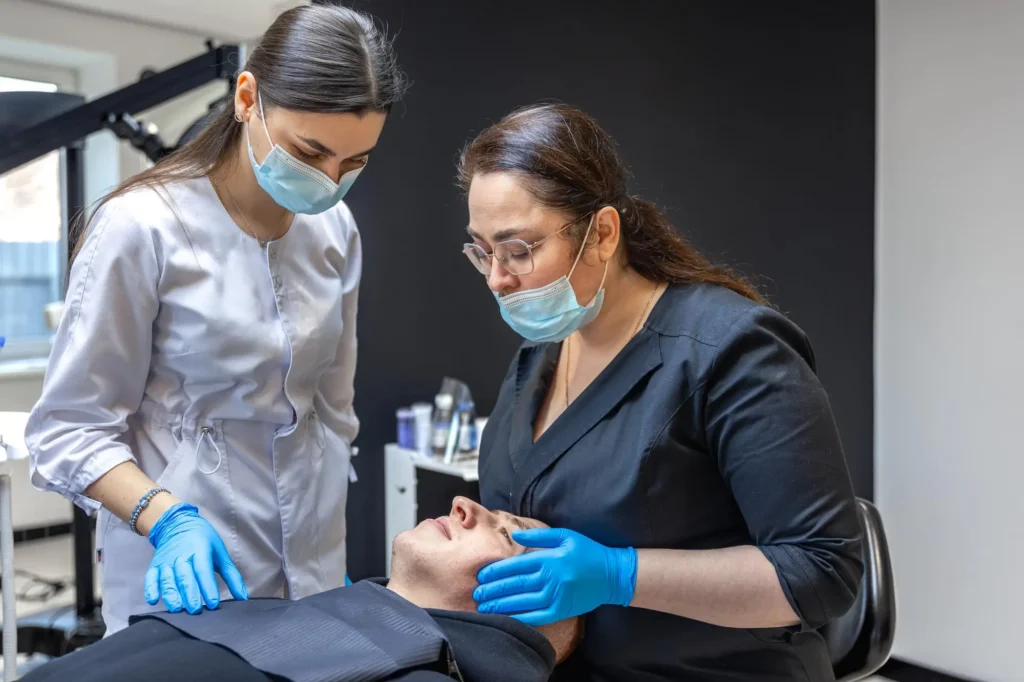
Why Dermatology Billing Has Its Own Rules
Dermatology occupies an unusual position in medical billing: the same practice, and sometimes the same visit, can involve procedures that are purely cosmetic and never billable to insurance alongside procedures that are medically necessary and fully reimbursable. A mole removed because a patient dislikes how it looks is not billable the same way a biopsy of a suspicious lesion is, even though both might happen in the same exam room on the same day. Getting that distinction right, consistently, is the single biggest factor separating clean dermatology claims from denied ones.
The Core Codes and Where Confusion Starts
Dermatology billing centers on a specific set of code families: skin biopsy codes (11102-11107), lesion destruction codes (the 17000 series), excision codes that vary by lesion size and margin, and Mohs micrographic surgery codes (17311-17315) for the staged removal of skin cancer. Confusion most often starts at the modifier level: modifier 25 is required when a significant, separately identifiable evaluation and management service is billed alongside a procedure on the same day, and modifier 59 (or the more specific X-modifiers) is needed when two procedures performed at the same visit are truly distinct rather than part of the same service.
Medical Necessity Documentation
Every dermatology claim tied to a lesion, growth, or biopsy needs documentation that supports why it was medically necessary rather than cosmetic: lesion size, location, appearance, and the clinical reasoning for biopsy or removal. Photo documentation, while not always required, strengthens the record considerably, particularly for claims that could otherwise be read as elective. The ICD-10 code attached to the claim has to align tightly with that documentation, since a mismatch between diagnosis and procedure is one of the fastest ways a dermatology claim gets flagged.
Common Denial Reasons Worth Watching
The recurring denial patterns in dermatology billing are fairly consistent across payers: missing modifier 25 when an E/M visit and a procedure are billed together, multiple lesions removed in one visit but not itemized with the correct number of units and locations, Mohs surgery billed without the staged documentation payers require, and cosmetic procedures billed as though they were medically necessary without supporting clinical justification. Skin cancer screening frequency limits also vary by payer, which can trigger denials for a screening billed slightly ahead of a payer’s allowed interval.
Payer Variation Adds Another Layer
Medicare and commercial payers don’t always agree on documentation thresholds for the same procedure, and Medicare Advantage plans in particular can apply frequency edits on skin checks and biopsies that differ from traditional Medicare. A dermatology practice billing across several payers needs its documentation standard to be strong enough to satisfy the strictest payer in its mix, rather than the most lenient one.
Where Specialized Billing Support Helps
Because dermatology mixes cosmetic and medically necessary care so closely, billing staff need dermatology-specific experience to catch modifier and documentation gaps before a claim goes out, not after it’s denied. A billing partner that already knows which combinations of E/M and procedure codes routinely need modifier 25, and which lesion-removal claims need clearer documentation to survive a payer review, closes most of this gap before it costs the practice a denial.
A Realistic Example
Consider a visit where a physician performs a full-body skin check (E/M service) and biopsies two suspicious lesions in different locations. Billed correctly, that claim needs modifier 25 on the E/M code to show it was separately identifiable from the biopsies, a distinct biopsy code for each lesion with its own location documented, and an ICD-10 code for each biopsy that matches the clinical note. Drop the modifier, or document both lesions under a single generic note, and the same visit becomes an easy target for a payer to deny or downcode.
Quick Reference Checklist
- Separate cosmetic procedures from medically necessary ones clearly in both documentation and coding.
- Apply modifier 25 whenever a significant E/M service is billed alongside a same-day procedure.
- Itemize multiple lesion removals by exact location and code rather than bundling them into one line.
- Document Mohs surgery stages fully, since payers routinely request this level of detail.
- Check each payer’s skin cancer screening frequency limits before scheduling routine checks.